Effects and safety of Ophiocordyceps sinensis preparation in the adjuvant treatment for dialysis patients: a systematic review and meta-analysis
Liu M, Cui C, Chang T, Zhou Q, Cui Y, Zhang S, Liao X
Frontiers in Pharmacology, 2024
Meta-analysis of 35 RCTs: adding Ophiocordyceps sinensis preparations to standard care in dialysis patients was associated with improvements in several clinical parameters.
Abstract
Ethnopharmacological relevance: Ophiocordyceps sinensis (O. sinensis), a genus of ascomycete fungi, has been widely used in China as a dietary supplement or natural remedy and intensively studied in various disease models for its immunomodulatory potentials. It is a rich source of various bioactive compounds and is used for treating end-stage renal disease. This systematic review with clinical evidence aimed to highlight the efficacy and safety of O. sinensis as an adjuvant treatment for patients undergoing dialysis.
Materials and methods: A systematic search through nine electronic databases up to 31 April 2024 was conducted for related studies. The Cochrane risk-of-bias tool was used to evaluate the quality of studies. The Grading of Recommendations Assessment, Development, and Evaluation (GRADE) system was used to assess the certainty of evidence. Two researchers independently searched the literature and evaluated the risk of bias.
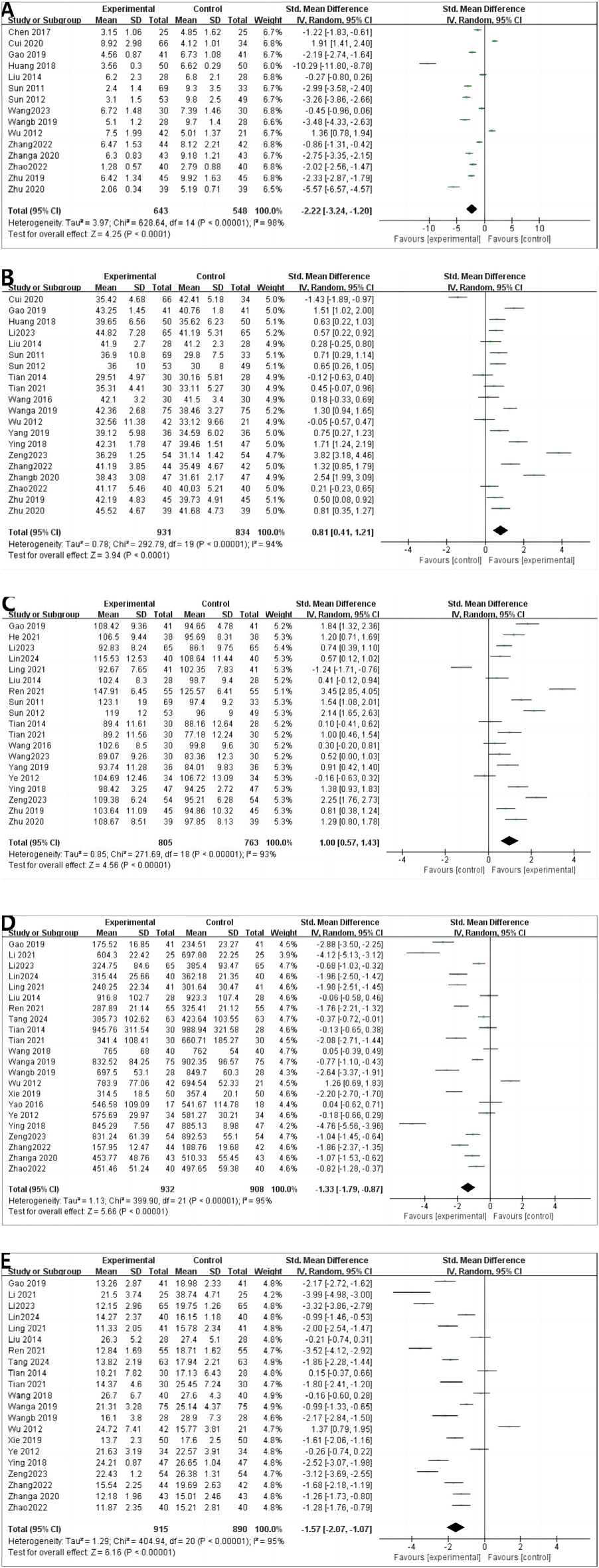
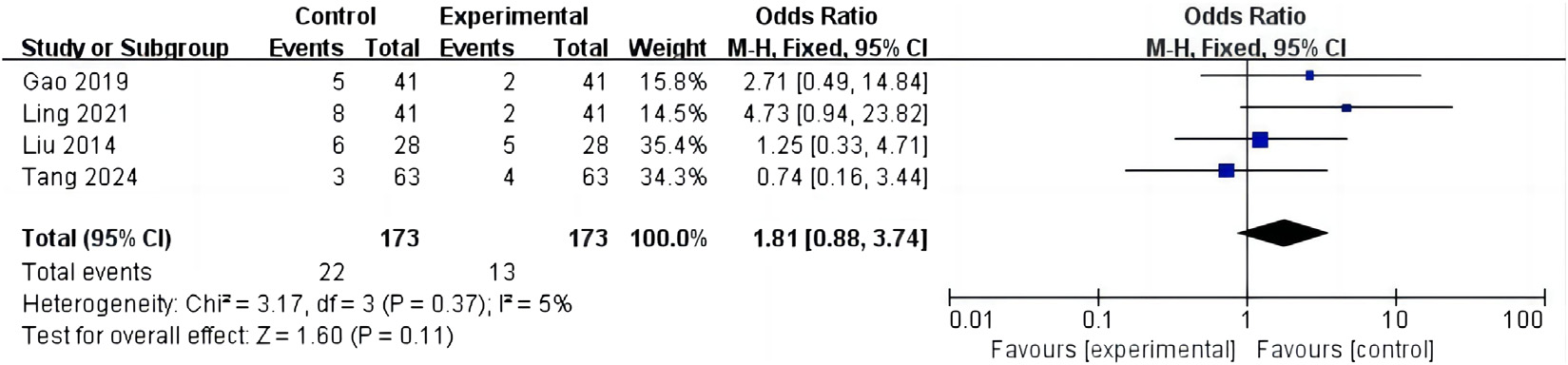
Results: After screening, 35 randomized controlled trials (RCTs) involving 2,914 patients were eventually included. The meta-analysis showed that using O. sinensis effectively reduced the following outcomes in dialysis patients: C-reactive protein (15 RCTs, MD = −2.22, 95% CI −3.24 to −1.20; very low certainty); creatinine (22 RCTs, MD = −1.33, 95% CI −1.79 to −0.87; very low certainty); blood urea nitrogen (21 RCTs, MD = −1.57, 95% CI −2.07 to −1.07; low certainty). It could also effectively improve: albumin (20 RCTs, MD = 0.81, 95% CI 0.41 to 1.21; low certainty); haemoglobin (19 RCTs, MD = 1.00, 95% CI 0.57 to 1.43; low certainty). The rate of adverse drug reactions was higher in the control group than in the experimental group (4 RCTs, MD = 1.81, 95% CI 0.88–3.74).
Conclusion: The current evidence indicates that dialysis patients receiving O. sinensis as adjuvant treatment may improve nutritional and micro-inflammatory status and renal function for both haemodialysis and peritoneal dialysis patients. However, some limitations affected the generalizability of our findings. High-quality studies evaluating mortality outcomes in patients with different dialysis modalities in CKD are warranted in future.
Systematic Review Registration: CRD42022324508 (PROSPERO). Keywords: dialysis, end-stage renal disease (ESRD), meta-analysis, Ophiocordyceps sinensis preparation, randomized controlled trials, systematic review.
1. Introduction
Dialysis is a treatment that removes wastes and extra fluid from the patient’s blood when the kidneys are no longer able to work effectively. Patients need dialysis when they develop end-stage kidney failure; usually by that time they have lost about 85%–90% of their kidney function and have a glomerular filtration rate below 15 mL/(min·1.73 m²). Dialysis has two types: haemodialysis (HD) using an artificial-kidney apparatus and peritoneal dialysis using the peritoneal membrane as a filter. HD is done for patients with no residual renal function, whereas peritoneal dialysis (PD) is recommended for younger patients due to its flexibility. In chronic or end-stage kidney failure, dialysis is the best method to remove accumulated toxins and improve quality of life. However, individuals with chronic renal failure on dialysis may have increased cardiovascular and metabolic risk and an increased risk of infection. Each additional year of dialysis is associated with an increase in the risk of dying by approximately 6%.
Among patients on maintenance dialysis, the mortality rate is high, at about 165/1,000. Many patients develop malnutrition and a micro-inflammatory state due to the dialysis tubing, reduced food intake, impaired intestinal digestion and absorption, and metabolic acidosis. Numerous complications also affect quality of life and increase mortality. Therefore, improving these complications is extremely important for prolonging lifespan and improving quality of life.
Ophiocordyceps sinensis (O. sinensis), also named Chinese caterpillar fungus, is a precious traditional medicine mainly distributed on the Qinghai–Tibetan Plateau. It has become one of the most valuable biological commodities traded worldwide owing to its medicinal value in anti-fatigue, antitumor, and kidney protection. Modern pharmacological experiments found that the main components of O. sinensis include cordyceps polysaccharide, cordycepin, cordycepic acid and so forth. Because wild O. sinensis is overexploited (habitat loss) and its price has surged, artificial cultivation is used to make it a more affordable material. Synthetic O. sinensis preparation is made from strains extracted from O. sinensis. Studies have shown that synthetic O. sinensis preparations can benefit dialysis patients by improving quality of life, reducing cardiovascular events, and improving the micro-inflammatory state and malnutrition.
Although a systematic review was published in 2019 to evaluate the efficacy of Cordyceps sinensis as an adjunctive treatment in HD patients, we aimed to conduct a comprehensive and updated systematic review and meta-analysis to evaluate the efficacy and safety of O. sinensis preparation in both HD and PD patients.
2. Objectives
This systematic review aimed to clarify whether O. sinensis preparation as adjuvant treatment – in both HD and PD patients – was more effective than control in anti-infection and reducing cardiovascular events. Our secondary objective was to explore the efficacy of O. sinensis across the two dialysis modalities (HD and PD), various sample sizes, different treatment courses, and follow-up periods.
3. Methods and analysis
Registration. The protocol was drafted according to PRISMA-P and reported in adherence to PRISMA. The protocol was registered in the International Prospective Register of Systematic Reviews (PROSPERO) with the identifier CRD42022324508.
Eligibility criteria (PICOS). Study type: only RCTs (with or without blinding) published in English or Chinese in peer-reviewed journals. Participants: adults ≥18 years receiving HD or PD, regardless of primary disease, race, sex or ethnicity. Intervention: O. sinensis preparations taken orally combined with dialysis and conventional treatment, with no restriction on dosage form, administration, course or manufacturer (11 kinds of O. sinensis preparations were identified, including Bailing and Jinshuibao capsules; all approved by China’s National Medical Products Administration). Comparator: the same dialysis and conventional treatment as the experimental group; studies whose control group used other traditional Chinese medicine or acupuncture were excluded.
Outcomes. The SONG-HD and SONG-PD core outcome sets were used, divided into primary outcomes (mortality, CVD, infection) and secondary outcomes (vascular access problems, dialysis adequacy, hyperkalaemia, life participation). When the included studies did not report these, alternative outcomes were used for meta-analysis.
Search and selection. A search strategy was created with an experienced librarian and adapted for PubMed, Embase, the Cochrane Library, SinoMed, CNKI, VIP, Wanfang Data, ICTRP and ClinicalTrials.gov. The search ran from database inception to 31 October 2022 and was updated on 31 April 2024. All records were imported into EndNote X9.1 and de-duplicated; two researchers (MXL and TYC) independently screened titles/abstracts, then rechecked full texts; a third reviewer (XL) resolved disagreements.
Risk of bias and data synthesis. Risk of bias was assessed with the Cochrane ROB tool across seven domains. Meta-analysis was conducted in Review Manager 5.3, computing odds ratios (dichotomous data) and weighted mean differences (continuous data) with 95% confidence intervals. A random-effects model was used when heterogeneity was present. Heterogeneity was assessed with the Q test and I² statistic (0% = none, ≥50% = considerable). Publication bias was assessed with funnel plots and Egger’s test (for >10 studies), with trim-and-fill where indicated. Sensitivity analysis (leave-one-out) and subgroup analysis (by dialysis modality, sample size, treatment course, follow-up period) were performed. The certainty of evidence for each outcome was graded with GRADE (from HIGH to VERY LOW).
4. Results
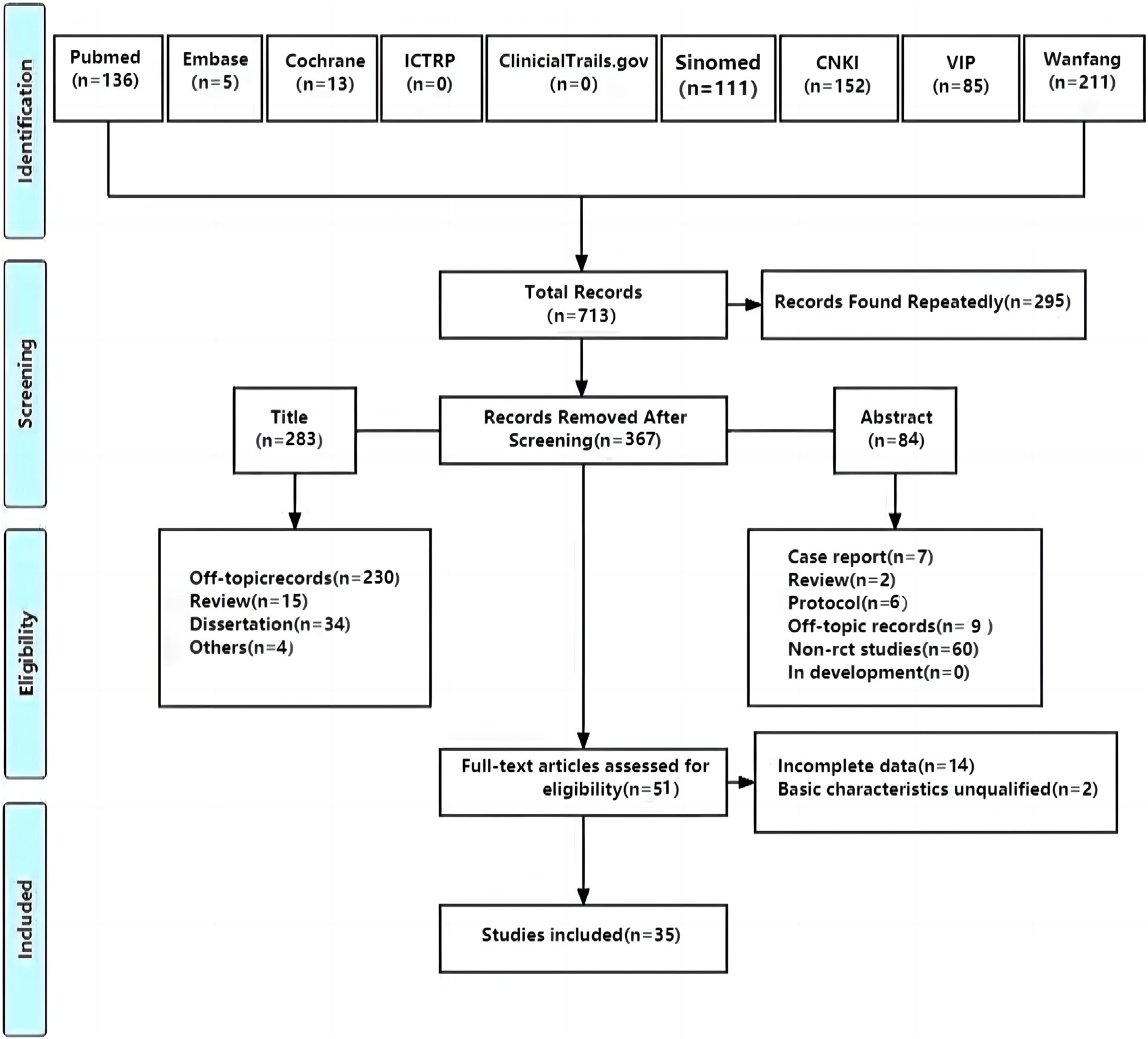
Literature search. A total of 713 studies were retrieved; after removing 295 duplicates, excluding 367 by title/abstract and assessing 51 full texts (14 RCTs excluded for incomplete data and 2 for unqualified baseline characteristics), 35 RCTs with 2,914 patients were included in the meta-analysis (Figure 1).
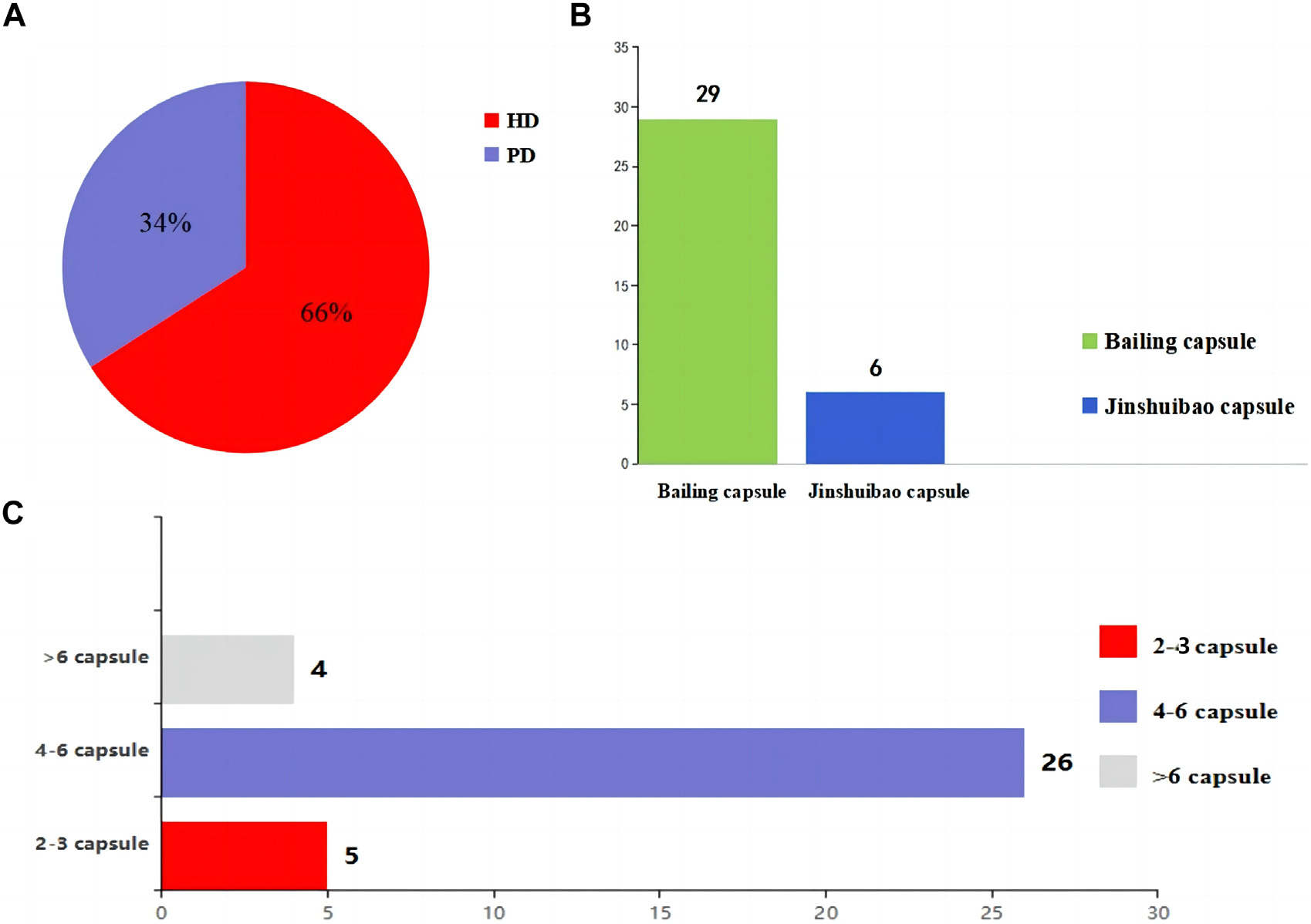
Description of included studies. All studies were from China. Sample sizes ranged from 35 to 150; age from 42.2 ± 15.2 to 74.54 ± 2.06 years; disease duration from 2.21 ± 0.58 to 168.24 ± 21.72 months; and dialysis history from 10.4 ± 2.0 to 35.16 ± 6.73 months. By modality, 1,931 patients (66%) received HD and 983 (34%) PD. Of the O. sinensis preparations, 29 of 35 studies used the Bailing capsule and 6 used the Jinshuibao capsule. For doses, patients in 5 studies took 2–3 capsules per dose, 26 studies took 4–6 capsules, and 4 studies took more than 6 capsules (Figure 2).
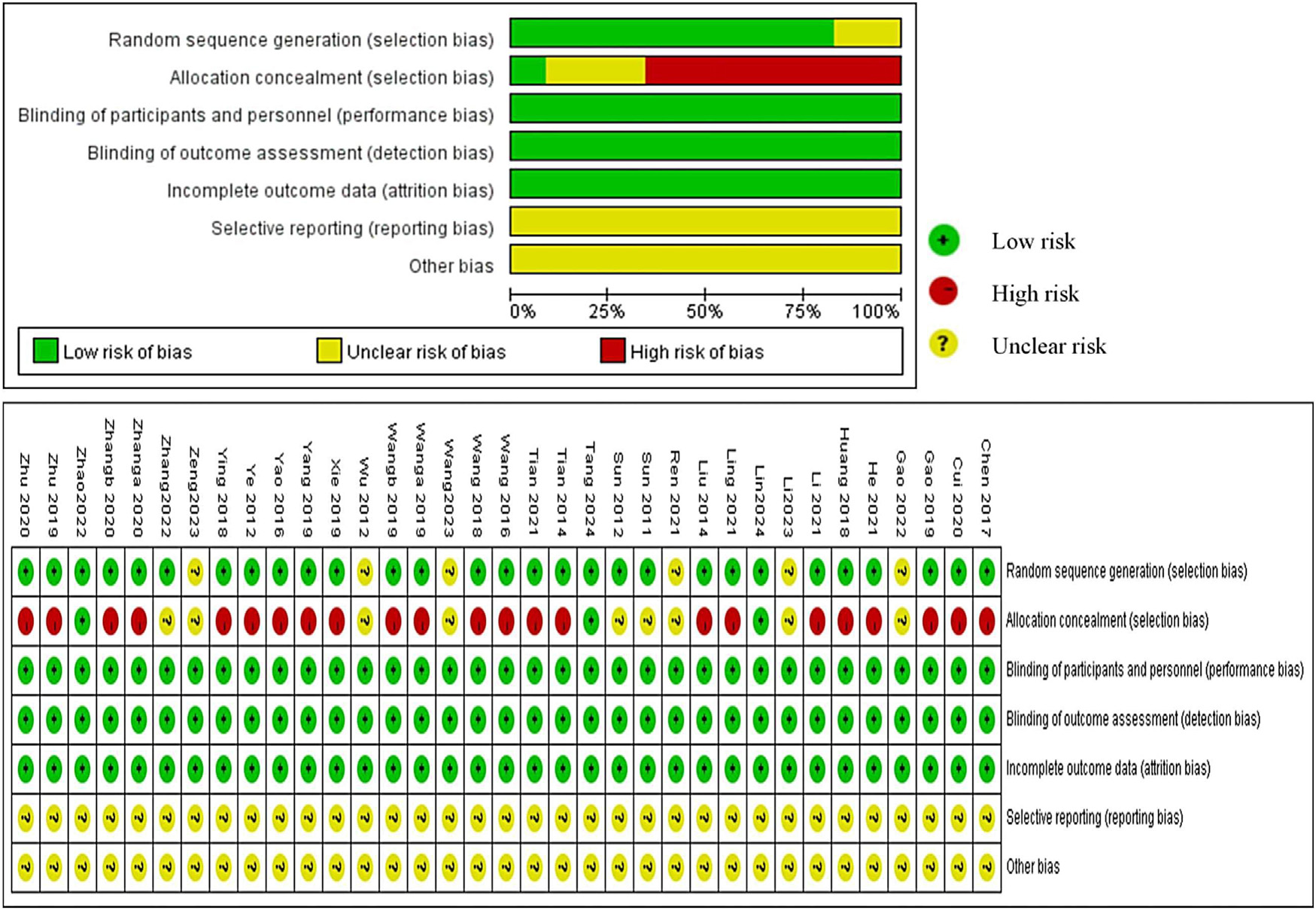
Risk of bias. Of 35 RCTs, 30 used random sequence generation methods (e.g., random number table); 5 were rated “unclear risk” due to a lack of description. Most studies were rated “high risk” for allocation concealment. Blinding was not used in any study, but the outcome measures were objective, so “blinding of participants and personnel” and “blinding of outcome assessment” defaulted to “low risk.” No missing data were found (“low risk”). No study protocols were located, so reporting bias was defined as “unclear” (Figure 3).
Outcomes in dialysis patients (Figure 4). C-reactive protein (CRP): 15 RCTs, 1,191 patients; CRP significantly decreased in the intervention group vs control [MD = −2.22; 95% CI −3.24 to −1.20; I² = 98%; p < 0.00001]. Albumin (ALB): 20 RCTs, 1,765 patients; ALB significantly increased [MD = 0.81; 95% CI 0.41–1.21; I² = 94%]. Haemoglobin (HGB): 19 RCTs, 1,568 patients; HGB significantly increased [MD = 1.00; 95% CI 0.57–1.43; I² = 93%]. Creatinine (CREA): 22 RCTs, 1,840 patients; CREA significantly decreased [MD = −1.33; 95% CI −1.79 to −0.87; I² = 95%]. Blood urea nitrogen (BUN): 21 RCTs, 1,805 patients; BUN significantly decreased [MD = −1.57; 95% CI −2.07 to −1.07; I² = 95%].
Adverse drug reactions (Figure 5). Four studies and 346 patients were included (fixed-effects model; p = 0.37; I² = 5%). No significant difference in the rate of adverse reactions was found between groups [MD = 1.81; 95% CI 0.88–3.74; p = 0.11]. Reported reactions were few: in the experimental group, six cases of gastrointestinal reaction, one of fatigue, five of nausea and one of infection (Table 3).
Subgroup analysis. Across dialysis modality, preparation type (Bailing / Jinshuibao capsules), intervention duration (≤12 vs >12 weeks) and dose (2–3 / 4–6 / >6 capsules), the direction of effects was broadly maintained: reductions in CRP, CREA and BUN and increases in ALB and HGB (detailed in Table 4 and Supplementary Figures S2–S5). The most notable exceptions were the >6-capsule dose, where several outcomes were not significant.
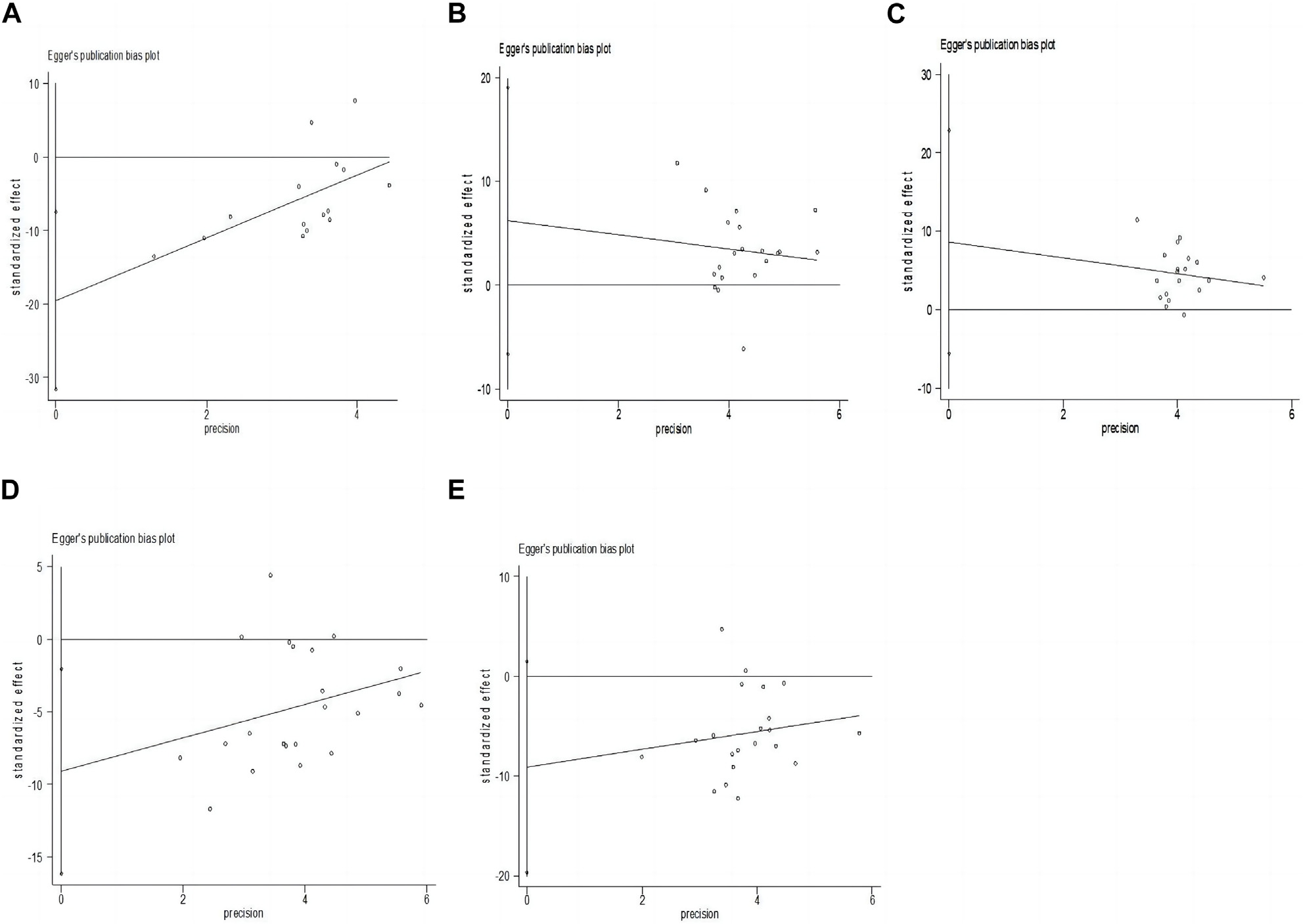
Sensitivity analysis and publication bias. Leave-one-out exclusion showed good robustness of the results. By Egger’s test, publication bias was found for CRP (p = 0.002), CREA (p = 0.019) and BUN (p = 0.025), whereas ALB and HGB showed none (p > 0.05). After trim-and-fill assessment, the results were considered reliable (Figure 6).
Quality of the evidence. By GRADE, all outcomes were rated “low” or “very low” quality – owing to serious imprecision, large heterogeneity and indirectness (a mix of different interventions and comparators) (Table 5).
5. Discussion
This review included RCTs assessing the effects and safety of O. sinensis preparations as adjuvant treatment in dialysis patients. After meta-analysis, the results showed that O. sinensis preparations could reduce CREA, BUN and CRP and increase ALB and HGB. However, considering the clinical heterogeneity and evidence quality, there is no high-quality evidence to support the use of O. sinensis preparations as adjuvant treatment in dialysis patients, and their harms are under-reported.
The global dialysis population is growing rapidly, especially in low- and middle-income countries, while many people lack access to kidney replacement therapy. Thus, new, accessible dialysis approaches and modalities that improve outcomes are urgently needed. Chinese caterpillar fungus (Dong Chong Xia Cao) has been used in China for over 700 years, mainly as a tonic to nourish the lungs and kidneys. Because natural O. sinensis cannot meet medical demand due to resource scarcity and high price, artificial cultivation is used; cultivated C. militaris produces cordycepin, which has pharmacological activity similar to O. sinensis and is more accessible.
This is the first systematic review to evaluate the efficacy and safety of O. sinensis preparation as adjuvant treatment in two categories of dialysis patients (HD and PD). Compared with the previous 2019 review, our work: (1) expanded the population to include PD as well as HD patients; (2) used a core outcome set (COS) from the COMET database; and (3) compared the response to O. sinensis between HD and PD patients. In the 6 years since the last review, new evidence has accumulated: we added 23 studies and the number of included patients rose to 2,914.
5.1. Limitations
The review followed a pre-specified protocol with a highly sensitive search strategy, but had several limitations. First, the language restriction reduced comprehensiveness. Second, some studies had detection and performance bias due to lack of blinding. Third, the COMET target outcomes were reported in only a few studies, so other outcomes not directly related to ESRD were included, downgrading the level of evidence. Fourth, the condition of dialysis patients is complex: the simultaneous presence of the primary disease and comorbidities produced large clinical heterogeneity; subgroup analysis by different primary diseases or comorbidity was not performed due to a lack of data.
6. Conclusion
In conclusion, O. sinensis may serve as an adjuvant treatment in dialysis patients by improving renal function, malnutrition and micro-inflammation. However, few studies reported clinically relevant outcomes and the methodological quality of the included studies was generally low. Therefore, high-quality RCTs using COMET outcomes are needed to provide more reliable evidence.
Conflict of interest: the authors declare no conflict of interest. Funding: supported by the China Academy of Chinese Medical Sciences Innovation Fund and several national programs (details in the original article). Publisher’s note: all claims are those of the authors and do not necessarily represent the publisher; any product or manufacturer claim is not guaranteed or endorsed by the publisher.
| O. sinensis + диализ / O. sinensis + dialysis | Контроль (диализ) / Control (dialysis) | |
|---|---|---|
| Желудочно-кишечная реакция / Gastrointestinal | 6 | 5 |
| Головокружение / Dizziness | 0 | 1 |
| Утомляемость / Fatigue | 1 | 5 |
| Сонливость / Drowsiness | 0 | 2 |
| Головная боль / Headache | 0 | 2 |
| Тошнота / Nausea | 5 | 4 |
| Инфекция / Infection | 1 | 2 |
| Гипотензия / Hypotension | 0 | 1 |
| Исход / Outcome | Подгруппа / Subgroup | N | MD/SMD (95% CI) | I² (%) |
|---|---|---|---|---|
| CRP | Haemodialysis | 11 | −1.96 [−3.17, −0.75] | 98 |
| CRP | Peritoneal dialysis | 4 | −2.93 [−4.88, −0.98] | 97 |
| CRP | Jinshuibao capsule | 6 | −0.68 [−1.08, −0.27] | 30 |
| CRP | Bailing capsule | 15 | −2.48 [−3.70, −1.26] | 98 |
| CRP | 2–3 capsules | 6 | −3.32 [−6.03, −0.60] | 99 |
| CRP | 4–6 capsules | 12 | −1.87 [−2.93, −0.82] | 97 |
| ALB | Haemodialysis | 12 | 0.81 [0.24, 1.37] | 95 |
| ALB | Peritoneal dialysis | 8 | 0.81 [0.24, 1.38] | 91 |
| ALB | Jinshuibao capsule | 6 | 1.32 [0.85, 1.79] | – |
| ALB | Bailing capsule | 19 | 0.78 [0.36, 1.20] | 94 |
| HGB | Haemodialysis | 12 | 1.23 [0.75, 1.71] | 92 |
| HGB | Peritoneal dialysis | 7 | 0.95 [0.41, 1.49] | 88 |
| HGB | Bailing capsule | 16 | 1.28 [0.88, 1.69] | 90 |
| CREA | Haemodialysis | 13 | −1.19 [−1.70, −0.68] | 94 |
| CREA | Peritoneal dialysis | 9 | −1.56 [−2.52, −0.59] | 96 |
| CREA | Jinshuibao capsule | 6 | −1.26 [−2.07, −0.44] | 93 |
| CREA | Bailing capsule | 17 | −1.35 [−1.92, −0.79] | 95 |
| BUN | Haemodialysis | 13 | −1.69 [−2.34, −1.03] | 96 |
| BUN | Peritoneal dialysis | 8 | −1.38 [−2.16, −0.60] | 94 |
| BUN | Jinshuibao capsule | 6 | −1.36 [−1.99, −0.73] | 89 |
| BUN | Bailing capsule | 14 | −1.57 [−2.27, −0.86] | 96 |
| Исход / Outcome | Эффект (95% CI) / Effect | Участники (исследования) / Participants (studies) | GRADE |
|---|---|---|---|
| CRP | на 2.22 SD ниже (−3.24…−1.20) / 2.22 SD lower | 1,191 (15) | очень низкое / very low |
| ALB | на 0.81 SD выше (0.41…1.21) / 0.81 SD higher | 1,765 (20) | низкое / low |
| HGB | на 1.00 SD выше (0.57…1.43) / 1.00 SD higher | 1,568 (19) | низкое / low |
| CREA | на 1.33 SD ниже (−1.79…−0.87) / 1.33 SD lower | 1,840 (22) | очень низкое / very low |
| BUN | на 1.57 SD ниже (−2.07…−1.07) / 1.57 SD lower | 1,805 (21) | низкое / low |
| Нежел. реакции / Adverse reactions | OR 1.81 (0.88–3.74) | 346 (4) | низкое / low |
Figures
References
- Bee YO, Zoriah A (2019) Efficacy of Cordyceps sinensis as an adjunctive treatment in hemodialysis patients: a systematic review and meta-analysis. J Tradit Chin Med 39(1), 1–14.
- Ashraf SA et al. (2020) Cordycepin for health and wellbeing: a potent bioactive metabolite of an entomopathogenic Cordyceps medicinal fungus. Molecules 25(12), 2735.
- Higgins JP et al. (2011) The Cochrane Collaboration’s tool for assessing risk of bias in randomised trials. BMJ 343, d5928.
- Guyatt G et al. (2011) GRADE guidelines: 1. Introduction – GRADE evidence profiles and summary of findings tables. J Clin Epidemiol 64(4), 383–394.
- Page MJ et al. (2021) The PRISMA 2020 statement: an updated guideline for reporting systematic reviews. BMJ 372, n71.
- Evangelidis N et al. (2017) Developing a set of core outcomes for trials in hemodialysis (SONG-HD). Am J Kidney Dis 70(4), 464–475.
- Manera KE et al. (2020) Establishing a core outcome set for peritoneal dialysis (SONG-PD). Am J Kidney Dis 75(3), 404–412.
- Himmelfarb J et al. (2020) The current and future landscape of dialysis. Nat Rev Nephrol 16(10), 573–585.
- GBD Chronic Kidney Disease Collaboration (2020) Global, regional, and national burden of chronic kidney disease, 1990–2017. Lancet 395(10225), 709–733.
- (полный список из 60+ источников – в оригинальном PDF / full 60+ reference list in the original PDF)