Cordyceps sinensis (a traditional Chinese medicine) for treating chronic kidney disease (Cochrane Review)
Zhang HW, Lin ZX, Tung YS, Kwan TH, Mok CK, Leung C, Chan LS
Cochrane Database of Systematic Reviews 2014, Issue 12. Art. No.: CD008353
Cochrane review of RCTs: as an add-on to standard therapy in chronic kidney disease, Cordyceps sinensis preparations were examined for kidney-function outcomes; authors note limited quality of the underlying evidence.
Abstract
Background. Cordyceps sinensis (Cordyceps, Dong Chong Xia Cao), a herbal medicine also known as Chinese caterpillar fungus, is one of the most commonly used ingredients in traditional Chinese medicine for the treatment of people with chronic kidney disease (CKD).
Objectives. This review aimed to evaluate the therapeutic effects and potential adverse effects of Cordyceps sinensis for the treatment of people with CKD.
Search methods. We searched the Cochrane Renal Group's Specialised Register to 14 April 2014 through contact with the Trials' Search Co-ordinator using relevant search terms. We also searched CINAHL, AMED, Current Controlled Trials, OpenSIGLE, and Chinese databases (CBM, CMCC, TCMLARS, Chinese Dissertation Database, CMAC and Index to Chinese Periodical Literature).
Selection criteria. Randomised and quasi-randomised trials comparing Cordyceps or its products with placebo, no treatment, or conventional treatment were considered for inclusion.
Data collection and analysis. Two authors independently assessed data quality and extracted data. Statistical analyses used the random-effects model, with results expressed as risk ratio (RR) for dichotomous outcomes or mean difference (MD) for continuous data with 95% confidence intervals (CI).
Main results. We included 22 studies involving 1746 participants. Among people with CKD not on dialysis, Cordyceps preparations significantly decreased serum creatinine (14 studies, 987 participants: MD −60.76 μmol/L, 95% CI −85.82 to −35.71); increased creatinine clearance (6 studies, 362 participants: MD 9.22 mL/min, 95% CI 3.10 to 15.34); and reduced 24-hour proteinuria (4 studies, 211 participants: MD −0.15 g/24 h, 95% CI −0.24 to −0.05). However, suboptimal reporting and flawed methodology meant risk of bias was high in four studies and unclear in 18, so these results need cautious interpretation.
Authors' conclusions. We found that Cordyceps preparation, as adjuvant therapy to conventional medicine, showed potential promise to decrease serum creatinine, increase creatinine clearance, reduce proteinuria and alleviate CKD-associated complications such as increased haemoglobin and serum albumin. However, definitive conclusions could not be made because of the low quality of evidence.
Plain language summary
Cordyceps sinensis (a Chinese medicinal herb) for treating chronic kidney disease. People with chronic kidney disease (CKD) experience gradual worsening of kidney function. Cordyceps (Cordyceps sinensis), sometimes known as Chinese caterpillar fungus, is widely used in traditional Chinese medicine to treat people with CKD. We conducted this review to investigate whether Cordyceps was a safe and effective treatment for people with CKD.
We searched the literature published up to April 2014 and assessed evidence from 22 studies conducted in China involving 1746 people with CKD who received Cordyceps as part of their treatment. We found some evidence that Cordyceps given in addition to conventional Western medicine may be beneficial in improving kidney function and addressing some complications. However, evidence quality was poor, and no definitive conclusions could be made about Cordyceps for people with CKD.
Background
Description of the condition. Chronic kidney disease (CKD) is a common condition in which kidney function progressively deteriorates and may be asymptomatic until advanced. CKD is associated with both non-communicable diseases (diabetes, hypertension) and infectious diseases (malaria, HIV, hepatitis B). By the KDOQI definition, CKD is either kidney damage (markers in urine/blood or on imaging) or decreased glomerular filtration rate (GFR < 60 mL/min/1.73 m²) for three or more months, regardless of cause. Continued deterioration may require renal replacement therapy (dialysis or transplantation). CKD incidence and prevalence are rising alongside hypertension and diabetes, posing a major global healthcare challenge.
Description of the intervention. Laboratory and clinical studies have shown that medicinal herbs traditionally used for kidney disease may offer potential benefits in CKD. Cordyceps sinensis is one of the most commonly used ingredients in traditional Chinese medicine for CKD. Cordyceps, a unique blade-shaped fungus that grows on caterpillars, is valued as a tonic herb for a wide range of disorders. Because naturally-occurring Cordyceps sinensis is in limited supply, various cultured and fermented mycelial products with similar pharmacologically-active components are now used in clinical practice.
How the intervention might work. Clinical studies of Cordyceps in CKD have shown potential benefits: slowing progression to end-stage kidney disease, reducing serum creatinine, and increasing creatinine clearance, serum albumin and haemoglobin, and improving lipid metabolism. Mechanistic studies relate the observed benefits to antioxidant and immunostimulatory properties, inhibition of mesangial proliferation, anti-inflammatory effects, reduced accumulation of extracellular matrix in the renal cortex, and reduced renal interstitial fibrosis.
Why it is important to do this review. A previous systematic review of Cordyceps for CKD reported favourable effects but was methodologically flawed (limited search, inappropriate outcomes, poor reporting quality). A review applying rigorous methodology therefore provides more reliable evidence and identifies areas for improvement in future studies.
Methods
Types of studies. All RCTs and quasi-RCTs (allocation by alternation, date of birth, etc.) evaluating the benefits and potential side effects of Cordyceps sinensis for CKD were included.
Participants. Adults and children with CKD at all stages. Exclusions: patients for whom baseline GFR/creatinine data could not be obtained; kidney transplant recipients; and those with diabetic nephropathy and primary nephrotic syndrome.
Interventions. The treatment group received Cordyceps or its products as the single treatment drug (extracts, cultured/fermented mycelial products). The control group received placebo, no treatment, or conventional treatment. Studies where Cordyceps was one of several components were not included. Co-interventions were permitted if identical across all arms.
Outcomes. Primary: time to RRT/dialysis initiation; all-cause mortality; CKD progression (CrCl increase or SCr decrease > 20% from baseline). Secondary: kidney function (GFR, CrCl, SCr), quality of life, proteinuria, blood pressure, anaemia (haemoglobin/haematocrit), nutritional status (albumin, cholesterol, body weight), bone disease (calcium, phosphorus), symptoms (pruritus, vomiting), and adverse effects.
Risk of bias and data synthesis. Two authors independently assessed risk of bias with the Cochrane tool. RR was used for dichotomous and MD for continuous outcomes (both with 95% CI). Heterogeneity was assessed with the χ² test and I² statistic (25%, 50%, 75% = low, medium, high). Data were pooled with the random-effects model (fixed-effect used to check robustness). Synthesis was restricted to studies at low/unclear risk of bias; high-risk studies were displayed on a forest plot without pooling. Because of imbalance in missing data, two studies were excluded from meta-analysis (Guo 2009, Yu 2003). Subgroup analysis was possible only by risk-of-bias level; there were insufficient data to analyse by CKD stage/definition or Cordyceps source and preparation.
Results
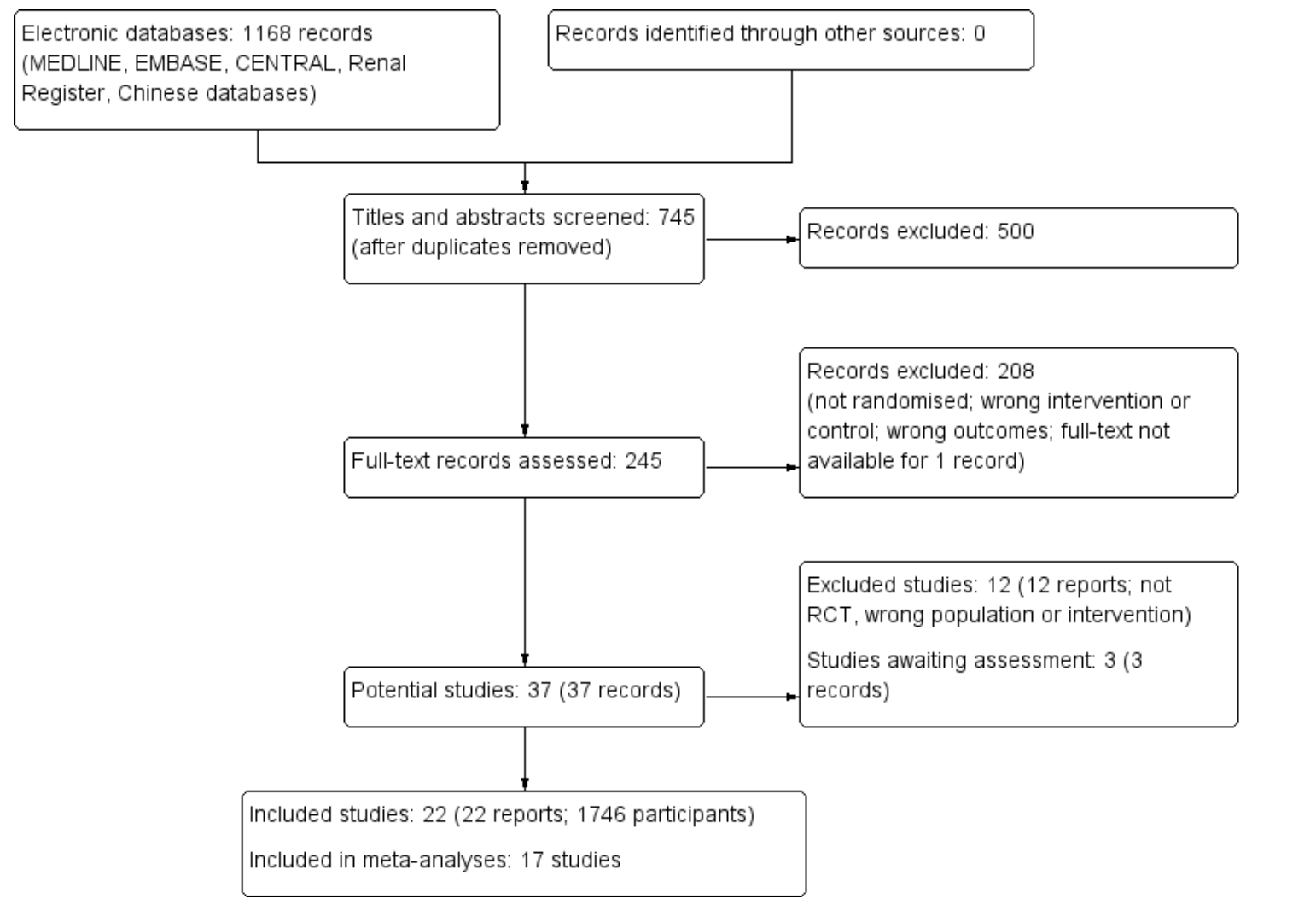
Results of the search. The search of English- and Chinese-language databases yielded 1168 citations (Figure 1). After independent title/abstract screening, 245 were potentially relevant; full-text assessment identified 25; three studies are awaiting assessment. Ultimately, 22 studies were included.
Included studies. 22 studies, all published in Chinese, conducted in hospitals in China; 1746 participants (958 men (54.9%); 788 women (45.1%)). Sample sizes ranged from 27 to 212. Baseline SCr (in 18 studies) ranged from 135 to 820 μmol/L. Primary CKD causes: chronic glomerulonephritis, diabetic nephropathy, nephrosclerosis, chronic pyelonephritis, hypertensive nephropathy. All studies examined mycelial fermentation products of Cordyceps sinensis: 13 used Jin Shui Bao capsule (0.33 g fermented Cordyceps), 9 used Bai Ling capsule (0.2 g). Oral, 3–6 capsules three times daily, treatment 1–6 months. Three studies compared Cordyceps with Western medicine, one with traditional Chinese medicine; the remaining 18 compared it with the same conventional treatment (three of these used haemodialysis as a co-intervention).
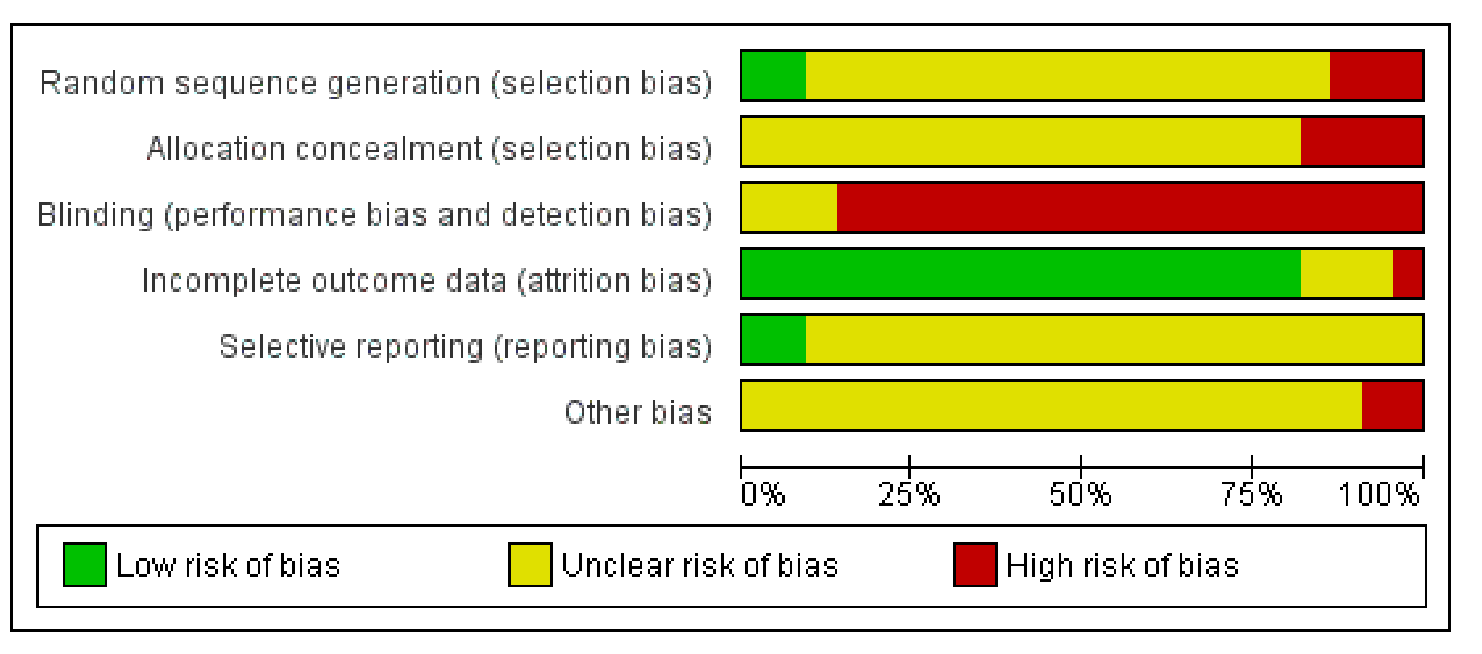
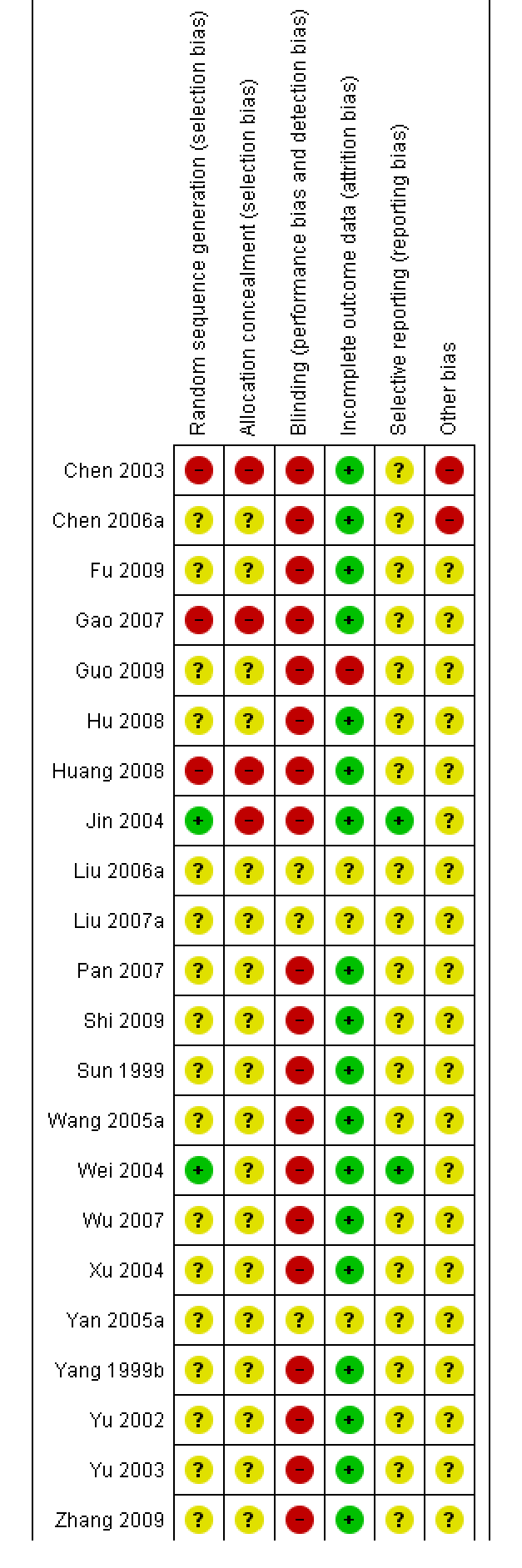
Risk of bias. Risk was high in 4 and unclear in 18 of 22 studies (Figure 2, Figure 3). Randomisation was usually mentioned only briefly without detail; allocation concealment was reported in none; blinding was unclear in three and unreported in the remaining 19. Four high-risk studies (Chen 2003, Chen 2006a, Guo 2009, Yu 2003) were excluded from quantitative analysis.
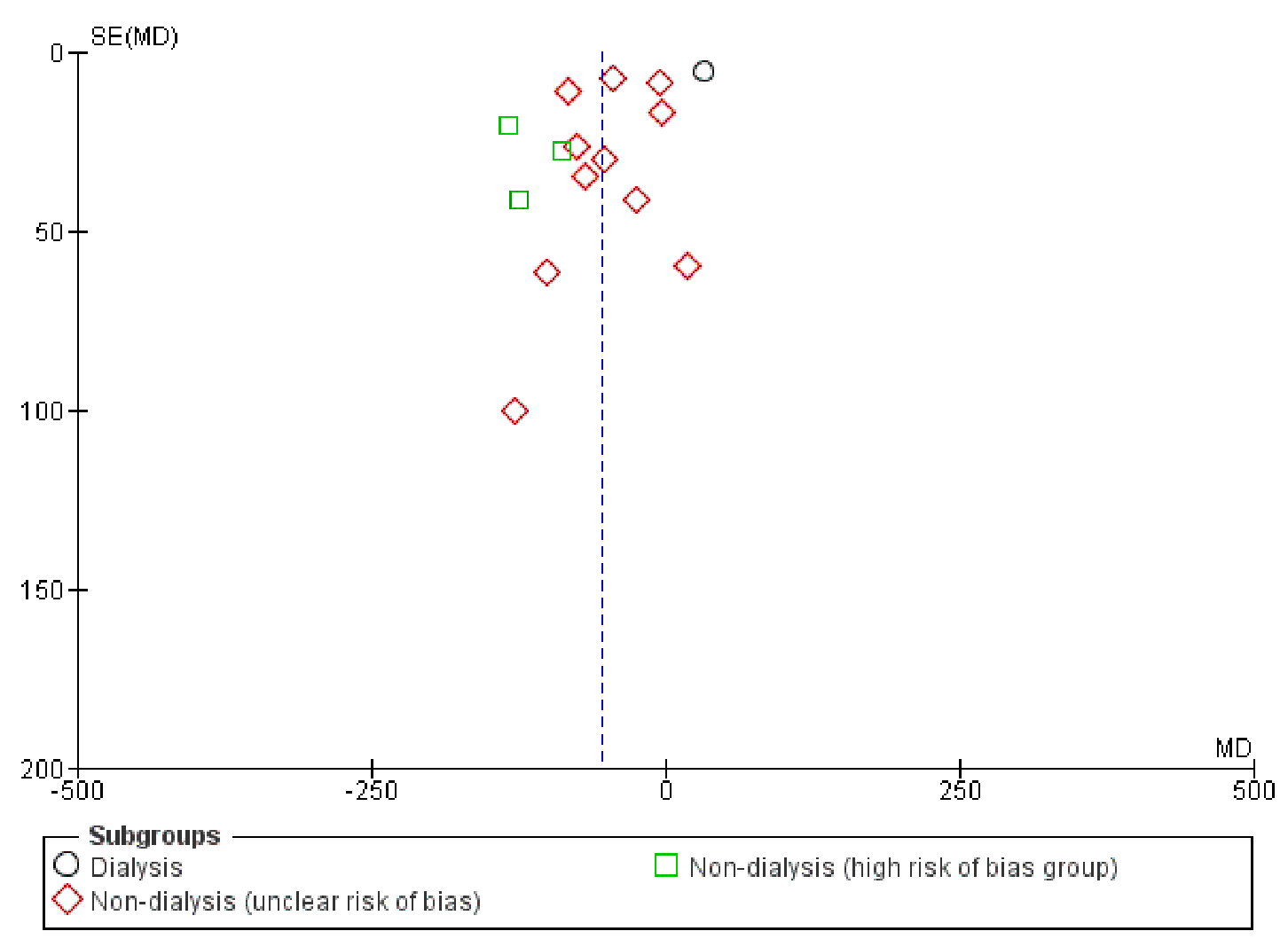
Effects of intervention – Cordyceps + conventional treatment versus conventional treatment. Kidney function: at unclear risk of bias, Cordyceps conferred no significant benefit on “CKD progression” (5 studies, 368: RR 1.09; 95% CI 0.99–1.21; I² = 23%), though the effect was significant in high-risk studies (2 studies, 227: RR 1.36; 95% CI 1.17–1.58). Overall, Cordyceps significantly decreased creatinine (15 studies, 1047: MD −53.50 μmol/L; 95% CI −84.17 to −22.83; I² = 93%; in non-dialysis patients – 14 studies, 987: MD −60.76; 95% CI −85.82 to −35.71) and significantly increased creatinine clearance (6 studies, 362: MD 9.22 mL/min; 95% CI 3.10–15.34; I² = 81%). There was no apparent publication bias (Figure 4).
Proteinuria, anaemia, nutrition, bone. Cordyceps significantly reduced 24-hour proteinuria (4 studies, 211: MD −0.15 g/24 h; 95% CI −0.24 to −0.05) and increased haemoglobin (5 studies, 283: MD 10.40 g/L; 95% CI 6.22–14.58) and haematocrit (1 study, 60: MD 3.49%; 95% CI 1.42–5.56). Serum albumin increased (4 studies, 323: MD 3.52 g/L; 95% CI 2.79–4.24); there was no significant effect on total cholesterol (2 studies, 198: MD 0.41 mmol/L; 95% CI 0–0.82). In single studies: significant increase in calcium (MD 0.15 mmol/L) and decrease in phosphorus (MD −0.11 mmol/L). No significant effect on systolic/diastolic blood pressure (1 study each, 75 participants).
Other comparisons. Cordyceps versus Western medicine (3 studies, not pooled): versus prednisone in aristolochic acid nephropathy (Gao 2007) Cordyceps significantly reduced creatinine and increased creatinine clearance; versus coated aldehyde oxystarch (Jin 2004) it significantly improved creatinine, clearance, haemoglobin, haematocrit and albumin; versus Lipo-PGE1 (Huang 2008) there were no significant differences. Cordyceps + traditional Chinese medicine versus TCM alone (Yan 2005a, 65 participants): no significant difference in creatinine, but significant reduction in proteinuria and increase in haemoglobin.
Adverse effects and unreported outcomes. Four studies reported no obvious adverse effects of Cordyceps. Individual studies noted diarrhoea/constipation (Liu 2006a) and mild discomfort reduced by taking the capsule after food (Huang 2008). Fifteen studies did not report adverse events, so reliable associations cannot be established. The primary outcomes “time to dialysis” and “all-cause mortality”, along with quality of life and some symptoms, were not reported.
Discussion
Summary of main results. The review included 22 studies (1746 participants with CKD), all in hospitals in China, with varying CKD stages (baseline SCr 135–820 μmol/L) and mycelial fermentation products of Cordyceps. As an add-on to conventional treatment, Cordyceps showed promising effects: decreasing creatinine, increasing creatinine clearance, reducing proteinuria and alleviating complications (low haemoglobin and albumin). However, low methodological quality and under-reporting preclude definitive conclusions.
Completeness and applicability of evidence. No study reported time to RRT/dialysis initiation or all-cause mortality. Creatinine clearance tends to overestimate GFR, and the lack of GFR data made it hard to define the degree of kidney damage and CKD stage. Because all studies were done in China, applicability to other settings (including the mix of co-interventions) is uncertain.
Quality of evidence and biases. Evidence quality was suboptimal: high risk in 4 and unclear in 18 of 22 studies; methodological flaws concerned randomisation, allocation concealment and blinding. There was marked heterogeneity in the conventional treatment used as co-intervention. The absence of masking and differences in multiple co-interventions between groups likely introduced bias. Four studies were excluded from quantitative analysis for missing key data; the authors believe this did not bias results, as populations and results were similar.
Authors' conclusions
Implications for practice. Current evidence indicates that, when used with conventional treatment, Cordyceps may offer some benefit in CKD by improving kidney function and alleviating complications such as anaemia and malnutrition. However, methodological quality was suboptimal, and further clinical studies are needed to confirm the potential benefits of Cordyceps in CKD.
Implications for research. Future studies of Cordyceps in CKD should: (1) undertake and clearly report randomisation and allocation concealment; (2) develop placebos mimicking Cordyceps products and blind participants, clinicians and outcome assessors (especially for subjective outcomes); (3) calculate sample sizes for sufficient power; (4) incorporate long-term outcomes (need for RRT, mortality, quality of life); and (5) record and report all adverse effects. The elaborated CONSORT statement for reporting RCTs of herbal medicines is strongly recommended.
Declarations of interest and funding: details are provided in the original Cochrane publication. Note: this review is informational; this translation does not replace medical advice.
| Исход / Outcome | N | n | Эффект (95% CI) / Effect | I² (%) |
|---|---|---|---|---|
| Прогрессирование ХБП / CKD progression (RR) | 5 | 368 | RR 1.09 [0.99, 1.21] | 23 |
| Креатинин / Serum creatinine, μmol/L | 15 | 1047 | MD −53.50 [−84.17, −22.83] | 93 |
| – без диализа / non-dialysis | 14 | 987 | MD −60.76 [−85.82, −35.71] | 82 |
| Клиренс креатинина / Creatinine clearance, mL/min | 6 | 362 | MD +9.22 [3.10, 15.34] | 81 |
| Протеинурия / Proteinuria, g/24 h | 4 | 211 | MD −0.15 [−0.24, −0.05] | 9 |
| Гемоглобин / Haemoglobin, g/L | 5 | 283 | MD +10.40 [6.22, 14.58] | 81 |
| Гематокрит / Haematocrit, % | 1 | 60 | MD +3.49 [1.42, 5.56] | – |
| Альбумин / Serum albumin, g/L | 4 | 323 | MD +3.52 [2.79, 4.24] | 0 |
| Общий холестерин / Total cholesterol, mmol/L | 2 | 198 | MD +0.41 [0, 0.82] (н.з./n.s.) | 0 |
| Кальций / Calcium, mmol/L | 1 | 66 | MD +0.15 [0.04, 0.26] | – |
| Фосфор / Phosphorus, mmol/L | 1 | 66 | MD −0.11 [−0.18, −0.04] | – |
| Систолическое АД / Systolic BP, mm Hg | 1 | 75 | MD −1.40 [−5.90, 3.10] (н.з./n.s.) | – |
| Диастолическое АД / Diastolic BP, mm Hg | 1 | 75 | MD +0.80 [−3.19, 4.79] (н.з./n.s.) | – |
Figures
References
- Zhang HW, Lin ZX, Tung YS, Kwan TH, Mok CK, Leung C, Chan LS. Cordyceps sinensis (a traditional Chinese medicine) for treating chronic kidney disease. Cochrane Database of Systematic Reviews 2014, Issue 12. Art. No.: CD008353. DOI: 10.1002/14651858.CD008353.pub2.
- Higgins JP, Altman DG, Gøtzsche PC, et al. (2011) The Cochrane Collaboration’s tool for assessing risk of bias in randomised trials. BMJ 343, d5928.
- NKF (2008) KDOQI clinical practice guidelines for chronic kidney disease.
- Xu 2006 – earlier review of Cordyceps for CKD (methodologically limited).
- Gagnier JJ et al. (2006) Reporting randomized, controlled trials of herbal interventions: an elaborated CONSORT statement. Ann Intern Med 144, 364–367.
- (полный список включённых 22 китайских исследований и всех источников – в оригинальном PDF / full list of the 22 included Chinese studies and all references – in the original PDF)